
Is ChatGPT Detectable in 2026? The Short and Long Answer
By AI Detector 360 Editorial Team · · Updated July 9, 2026 · 6 min read
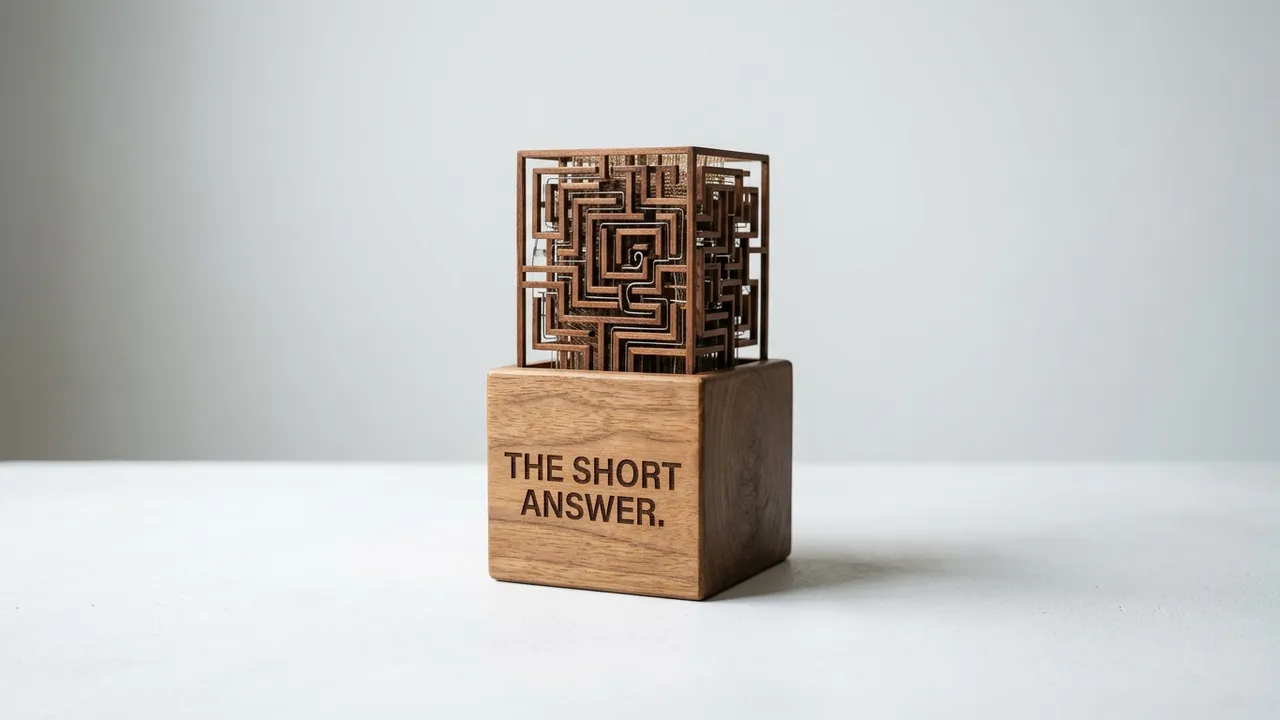
ChatGPT can draft an essay in under a minute, which leaves students, editors, and hiring managers typing the same question into search bars: can anyone actually tell? The honest answer has a short version and a long version, and the gap between them is where most bad decisions happen.
Yes — unedited ChatGPT output is usually detectable. Modern detectors catch raw ChatGPT text with high accuracy on samples of a few hundred words. Reliability drops fast once text is edited, paraphrased, or run through a "humanizer": the RAID benchmark (ACL 2024) found detector accuracy collapses under paraphrase attacks. And detection is always probability, never proof.
Key takeaways
- Unedited ChatGPT output is the easy case — leading detectors catch most of it on samples of 300+ words.
- Editing and paraphrasing erode detection fast; the RAID benchmark measured sharp accuracy drops under paraphrase attacks.
- There's no watermark to find. OpenAI retired its own classifier in 2023, so all detection is statistical inference.
- A detection score is evidence to weigh, never proof — treat it like a smoke alarm, not a verdict.
Why ChatGPT text is detectable at all
ChatGPT writes by predicting the most statistically likely next word, over and over. That process leaves fingerprints: sentence lengths that vary less than human writing, word choices that stay safe and predictable, paragraphs assembled on the same tidy blueprint. Detection models are trained on millions of examples to measure exactly those properties — researchers call the two best-known ones perplexity and burstiness.
Read ten ChatGPT answers in a row and you can feel what the math measures. Every sentence lands in the same middle register. Every list has three items. Every argument closes with a tidy summary. Humans drift, digress, and vary; models regress to the mean, and that regression is measurable.
What detectors are not doing is finding a hidden signature. OpenAI has never shipped a public watermark for ChatGPT text, and it retired its own AI-text classifier in July 2023 for "low accuracy" after the tool caught just 26% of AI writing while false-flagging 9% of human text. Every ChatGPT detector on the market, ours included, works by statistical inference on the writing itself. That's also why the same tool can be impressively right on one sample and embarrassingly wrong on the next.
When is ChatGPT detectable — and when isn't it?
One variable predicts detection outcomes better than anything else: how much the text changed after ChatGPT produced it.
| What's being scanned | Detection outlook |
|---|---|
| Raw ChatGPT output, 300+ words | Strong — leading detectors flag most of it consistently |
| Raw output under ~150 words | Shaky — too little signal for a stable score |
| Light edits (typos fixed, a few words swapped) | Still strong — the statistical skeleton survives |
| Deep human revision, sentence by sentence | Weak to moderate — it increasingly is the reviser's writing |
| Paraphraser or "humanizer" output | Unreliable — many detectors degrade badly, though some now target this directly |
| Human-AI hybrid drafting | Murkiest case — mid-range scores at lower confidence |
The middle rows are where real life happens, and they're where tools struggle most. Back in April 2023, a Washington Post test fed Turnitin 16 samples of mixed student and AI writing, and the software got more than half of them at least partly wrong. Hybrid drafting has only become more common since, and it remains the hardest case for every detector we've tested.
Sample length is the other big lever. Below roughly 150 words there aren't enough sentences to measure, so scores swing on re-runs. We wrote a full guide to how much text AI detectors need before any score deserves your trust.
What the research shows in 2026
The RAID benchmark (Dugan et al., ACL 2024) is the largest public stress test of AI text detectors: over 10 million documents and 12 adversarial attack types. Its two headline findings still frame the field. Detectors handle unmodified machine text well, and they degrade sharply when that text is paraphrased or laced with look-alike characters.
Later results sharpen the picture. A 2025 University of Chicago NBER working paper (Jabarian and Imas) held commercial detectors to a strict policy bar — a false-positive rate of 0.5% or lower — and found only one tool met it. The same paper put per-detection costs at two to six cents, which explains the flood: detection is cheap enough for anyone to run, so the scarce skill is interpreting it. At ACL 2025, Russell, Karpinska and Iyyer showed that expert human annotators identified AI text with 99.3% accuracy, so practiced human judgment remains competitive with the best software. Deployment, meanwhile, is already massive: Turnitin's detector processed over 200 million papers in its first year, flagging 11% as at least 20% AI (Turnitin press data).
And OpenAI's own guidance for educators still says AI detectors haven't proven reliable enough for decisions with lasting consequences for students. When the maker of ChatGPT tells you detection is fallible, believe both halves of the message: the tools work often, and they fail often enough to matter. We break down the numbers in how accurate AI detectors really are.
Check any text for AI — free
Paste up to 5,000 characters into our free scanner, no sign-up. Full multi-engine reports with sentence heatmaps start at $0.
Try the free AI detectorThe editing cliff
Why does paraphrasing hurt detection so badly? Because detectors read surface statistics, and a rewrite re-rolls them. Word choices shift, sentence rhythm changes, and the probability patterns that flagged the original get scrambled — while the ideas stay machine-made. That finding is real, and an entire "humanizer" industry markets itself on it.
The pitch leaves out two things. Degradation is inconsistent: RAID found attack effectiveness varies widely by detector, so text that sails past one tool gets flagged by the next. And the defense adapts. GPTZero, for one, now advertises a dedicated "AI paraphrased" classification and claims 93.5% accuracy against output from more than a dozen paraphrasing tools. Vendor-run numbers deserve salt, but the direction is unmistakable: humanized text is becoming its own detection target. We weigh the full evidence in can AI text really be made undetectable.
How to check a text yourself
- Gather at least 300 words. More text means a steadier score.
- Use a detector that shows its work. The free AI detector on our homepage takes up to 5,000 characters, no sign-up required; signed-in users can upload PDF and DOCX files and export the result as a PDF report.
- Read the sentence heatmap, not just the headline number. AI Detector 360 highlights which sentences drive the score, which tells you far more than a lone percentage.
- Check the confidence label. A 70% score at low confidence is a shrug, not a verdict.
- Interpret in context. Our guide to what AI percentage should actually concern you covers fair thresholds for both sides of the desk.
The bottom line
Is ChatGPT detectable in 2026? Unedited: usually yes. Lightly edited: often. Heavily revised or machine-paraphrased: unreliably — and anyone promising certainty in either direction is selling something. If you write with AI, disclose it where disclosure is expected. If you check for AI, treat scores as leads to investigate, never verdicts to enforce.
The ground under the question is shifting, too. Since August 2, 2026, the EU AI Act's Article 50 transparency rules require AI-generated content to carry machine-readable marking in the EU — a regulatory push toward provenance that's declared rather than guessed. Statistical detection will matter most for the text that ignores those rules, which is to say: the text most worth catching.
Run your own text through AI Detector 360 and you'll see the answer the way we think it should always be presented: a percentage, a confidence level, and a sentence-level map. Evidence, not proof.
Check any text for AI — free
Paste up to 5,000 characters into our free scanner, no sign-up. Full multi-engine reports with sentence heatmaps start at $0.
Try the free AI detectorFrequently asked questions
Does ChatGPT put a watermark in its text?
No. There is no public watermark in ChatGPT's text output as of 2026, and OpenAI retired its own detection classifier in July 2023 after it caught only 26% of AI-written text. Detection tools rely on statistical analysis of the writing itself, not hidden markers.
Can I just ask ChatGPT whether it wrote something?
No — its answer is worthless. OpenAI's educator guidance states that ChatGPT has no knowledge of which content is AI-generated, and its responses to "did you write this?" are essentially random. In a 2023 incident at Texas A&M–Commerce, ChatGPT "confirmed" authorship of an entire class's essays and nearly failed every student.
Are newer GPT models harder to detect than older ones?
Somewhat, but it's an arms race rather than a finish line. Each generation writes more varied prose, and detector vendors retrain on the new output. Benchmarks like RAID show the bigger driver of misses isn't the model version — it's whether the text was paraphrased or edited afterward.
How many words does a detector need to catch ChatGPT?
Plan on at least 150 words, and ideally 300 or more. Below that, there are too few sentences for statistical signals to stabilize, and scores can swing between re-runs. Very short samples produce unreliable verdicts in both directions.
Sources & further reading
Fair-use note: AI detection scores — from any tool, including ours — are probabilistic estimates, not proof. Never make academic, employment or legal decisions on a score alone.
Related reading

How Accurate Are AI Detectors in 2026? What Studies Actually Show
How accurate are AI detectors in 2026? What independent studies from Stanford, UPenn and NBER actually found — and how to vet any vendor's accuracy claim.
Jul 6, 2026 · 6 min read

Can AI Detectors Be Wrong? Yes — Here's How Often
Can AI detectors be wrong? Yes: documented failures, real error rates from independent studies, and a checklist for when to trust or challenge a score.
Jul 15, 2026 · 6 min read

Falsely Accused of Using AI? A Step-by-Step Defense Guide for Students
Falsely accused of using AI? A step-by-step defense guide: version history, drafts, writing samples, the research on detector errors, and how to escalate.
Jul 13, 2026 · 6 min read